

I deleted my Substack publication a week after posting.
Not because Substack is bad. Not because I failed at it. But because I paid attention to the evidence.
Let me be clear about something first:
I know how to show up.
I’ve posted a newsletter every Tuesday for over 40 weeks straight. At least 3 LinkedIn posts a week for the last 4 months. 36 podcast episodes over 30 weeks. I’ve shown up as a parent every single day for 6 years. I’ve been in the workforce for nearly two decades. I earned my MBA. I’ve closed nearly $10M in enterprise tech sales over the last 5 years.
I’m not a quitter. I know how to be consistent when it matters.
So when I shut something down after one week, pay attention.

Here’s what I’ve learned about taking action:
Starting is hard. That’s literally why I created The Connector Method.
Most people don’t start things because they’re waiting to feel ready. Waiting for the perfect plan. Waiting for certainty.
But what I’ve discovered is that the hard part isn’t just starting, it’s what comes after.
It’s listening to what happens next. Actually using the evidence to make decisions instead of ignoring it because you’ve already invested time, energy, or money.
I started Substack. Within a week, the evidence was clear for me: it wasn’t creating capacity in my life, it was consuming it.
So I shut it down.
Not after months of forcing it. Not after burning out trying to make it work. After one week.
Now, I know what you might be thinking: “But what about all the effort you put in? What about the sunk cost?”
Here’s the thing about sunk cost: the cost was already sunk the moment I invested it. Continuing wouldn’t get it back. It would just add more cost on top.
For me, in this situation, with my specific goals and constraints – shutting it down was the right call.
That might not be true for you. Substack might be perfect for how you work and what you’re building. This isn’t about Substack being bad. It’s about me learning to recognize when something isn’t serving my actual life.
This post is about what happened when I listened to the evidence from my own experiment. What I learned about my capacity. And how that shaped what I’m building instead.
The Substack Experiment: What I Thought It Would Be
When I started, I thought Substack would be:
- A simple place to write longer thoughts
- A low-friction publishing workflow
- Another way to build my audience and authority
- A platform where “serious” creators publish
I’d watched other entrepreneurs build massive audiences on Substack. I’d seen the success stories. The revenue screenshots. The “I quit my job thanks to my newsletter” posts.
And technically, Substack could do all those things for the right creator.
I just wasn’t that creator.
What Became Clear Very Quickly
Here’s what I noticed after just a few days:
I wasn’t enjoying it.
It felt like a lot of reading. A lot of writing. A lot of cognitive load.
I kept opening the editor and feeling… resistance. Not writer’s block. Not imposter syndrome. Just a genuine “this doesn’t feel right.”
When I stopped to actually examine that feeling, I realized:
- I don’t enjoy long-form reading and writing the way Substack requires
- My actual joy is coming from talking (podcasting, speaking, video)
- I was about to create another content treadmill I’d have to maintain
- My written content belongs in one place where it compounds over time
And then there was the cultural fit.
Substack reminded me of Twitter, which I stopped using over a decade ago. It just doesn’t feel practical for someone with a full-time job and kids.
But it was more than that.
Substack has a particular culture. It’s a space for people who want to be paid specifically for their writing. For people who want to dedicate serious time to the art of prose. And I respect that deeply.
But that’s not what I’m building.
I have a blog (I mean, you’re reading it right now!). One place for long-form writing is enough. I don’t need two cadences and platforms to maintain.
And if I’m being completely honest? The vibe felt… AI-skeptical. I know there are huge AI accounts on Substack, but the overall culture seemed to lean toward preserving “real writing” and the craft of prose over the efficiency and leverage AI provides.
I’m the opposite. I want AI to help me write faster, distribute wider, and create more capacity, not to resist it in service of proving I can write well manually. Been there, done that, have the pre-AI era degrees to prove it.
I just realized I’d rather put that energy into my blog. One place. One system. One home for my writing that uses AI as infrastructure, not as something to apologize for.
I know I could talk about all of this on Substack. I could write about AI systems, parallel income strategies, homesteading experiments, and family infrastructure design.
But it still felt like another platform, another algorithm, another place to show up and measure myself.
And that exhaustion was information.
Why This Matters If You’re Building Alongside Your Life
Here’s what most people don’t tell you about building anything alongside your career and family:
Every platform you add is a promise you’re making to yourself.
A promise to:
- Show up consistently
- Create content regularly
- Engage with your audience
- Monitor your metrics
- Optimize your strategy
When you’re already working full-time, raising kids, and trying to build something meaningful, every additional platform becomes overhead.
Not leverage. Overhead.
This is especially true if you’re trying to create parallel income or build authority without abandoning your current life. You don’t have unlimited time. You don’t have unlimited energy. You need to be ruthlessly strategic about where your effort goes.
Because capacity is the actual constraint.
Not knowledge. Not opportunity. Not potential.
The Connector Method in Action
This is literally the framework I teach:
Action Reveals Truth
I launched Substack to test it. I didn’t just research it. I didn’t just think about it. I took action.
Because here’s what I know from years of building businesses, pivoting careers, and creating income streams: you can’t know if something works until you actually do it.
Evidence Guides Pivots
Within a week, I had clear data:
- I wasn’t enjoying the process
- It felt like overhead, not leverage
- It didn’t align with my goals to increase capacity
- It was adding friction instead of removing it
I could have ignored this evidence. Pushed through because I “should” be consistent. Because I’d made a commitment. Because pivoting might look like failure.
But evidence-based decision making isn’t about stubbornness. It’s about responsiveness.
And the sunk cost – the time I’d already invested – was already gone. Continuing wouldn’t get it back.
Confidence Accelerates Results
I had enough evidence to make a confident decision to shut it down.
No second-guessing. No “maybe if I just give it more time.” No guilt about the initial investment of time and energy.
Just a clear, strategic pivot based on real data.
Results Create Transformation
I’m now focused on what actually gives me energy and what actually builds assets that compound.
For me, that’s what discernment looks like in practice.
What Actually Gives Me Energy (And Why It Matters)
Right now, my joy is coming from building systems that reduce friction rather than add to it.
I’m deep in:
- AI workflows and automation – finding ways to collapse 10 hours of work into 1 hour
- Streamlining my podcast and content creation – building once, distributing everywhere
- Testing ways to reduce cognitive load – because mental energy is finite
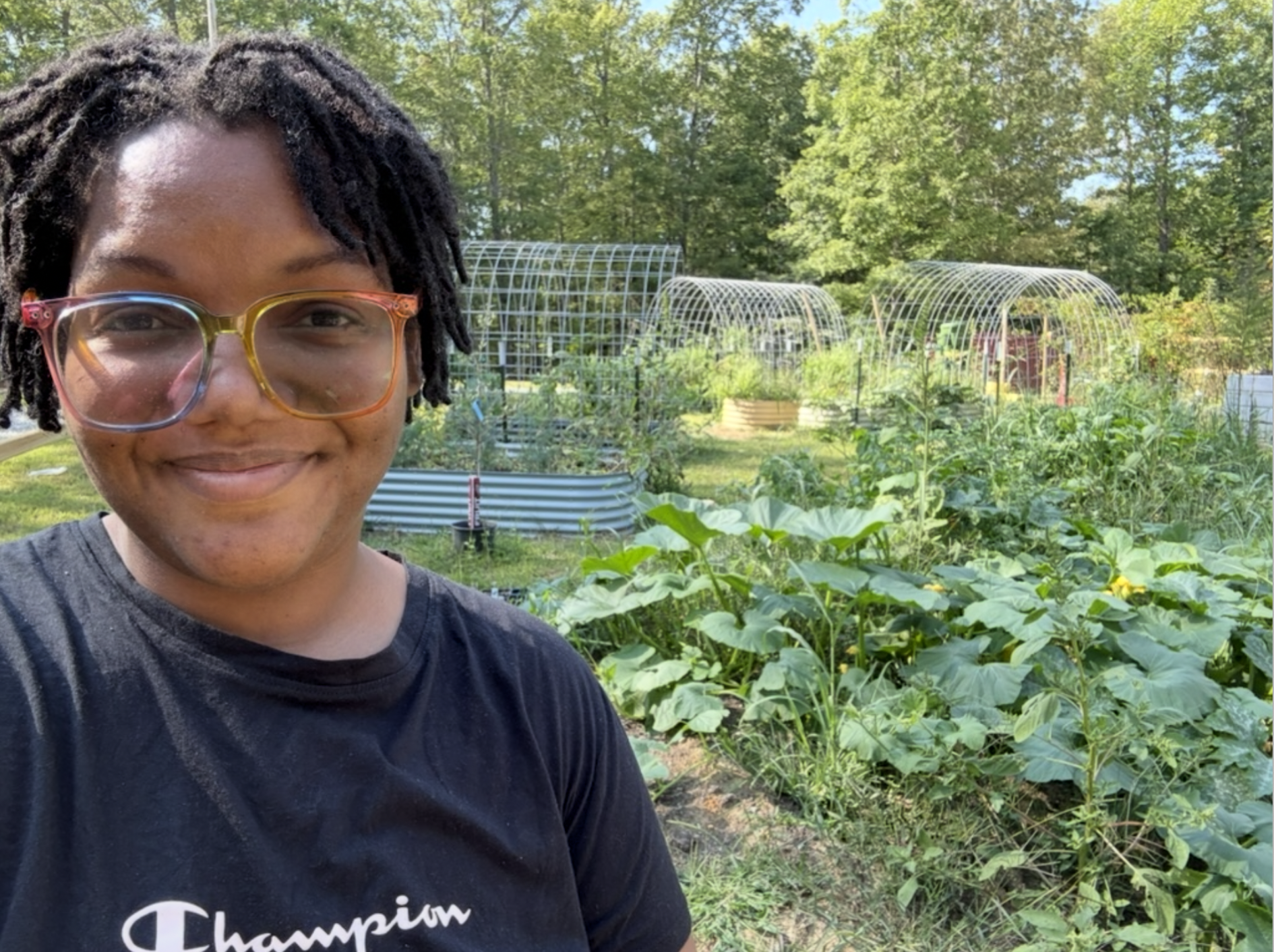
- Preparing the garden for spring – real food systems that feed my family
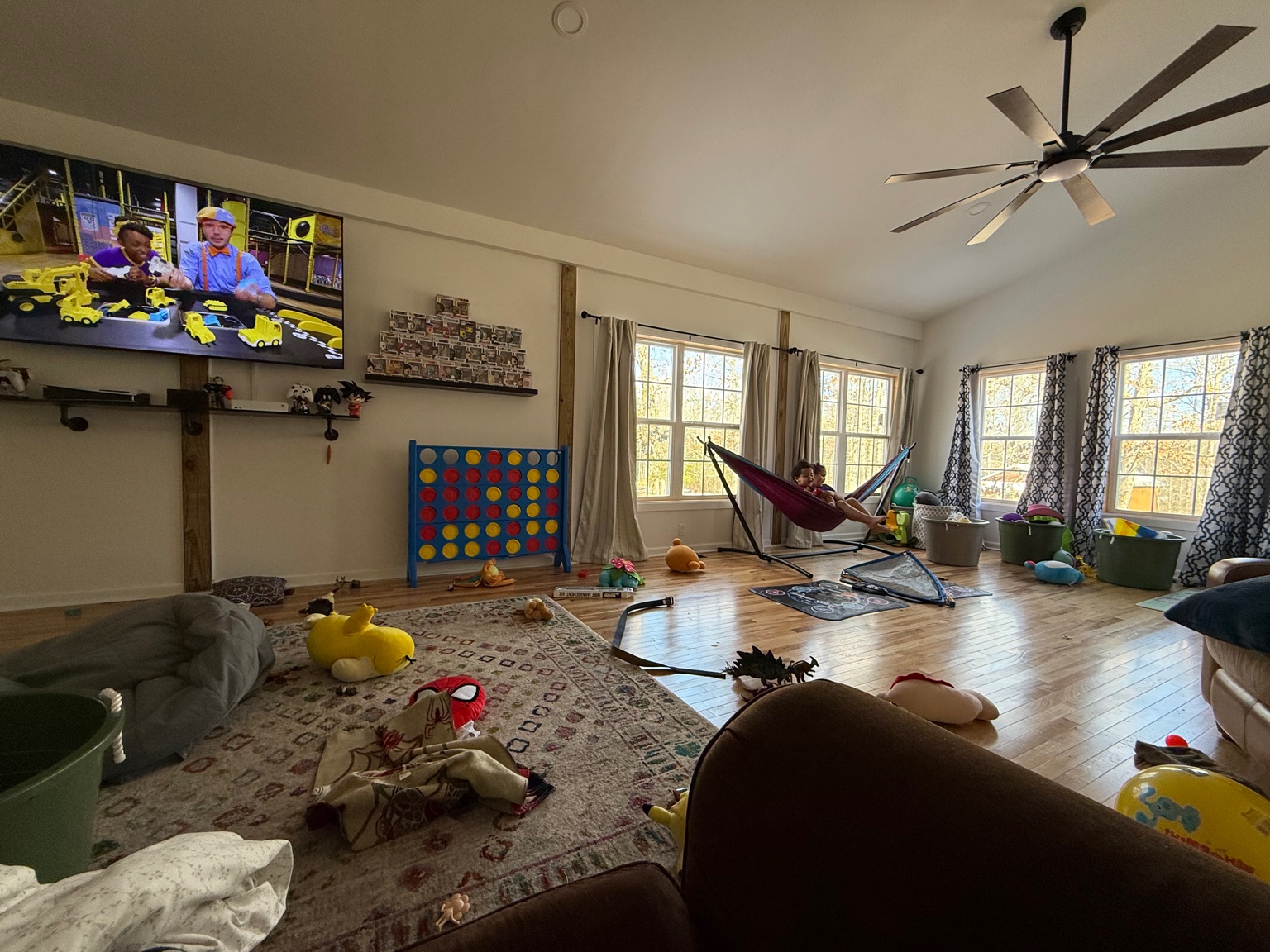
- Visiting national and state parks with my family – being out in nature, connecting with my kids, experiencing the freedom these systems create
- Building things that run without constant attention – because sustainability matters more than scale
That’s where my curiosity is alive. That’s where momentum shows up naturally.
And here’s what I’ve learned after years of juggling full-time work and parallel building: Energy management is everything.
The platforms, systems, and commitments that drain your energy aren’t neutral. They’re costing you in time, in attention, in the capacity you need for what actually matters.
This isn’t about productivity hacks or time management. It’s about designing a life that actually holds up.
The Real Cost of Platform Proliferation
Let me be specific about what happens when you scatter your energy across too many platforms:
You Fragment Your Authority
Every piece of content you create could be building something cohesive. When you publish everywhere, that cohesion disappears.
You become known for showing up, not for what you actually know or build.
You Build on Rented Land
Platforms own your audience. They own the algorithm. They own the rules.
If the platform changes its priorities, your reach disappears overnight. If they change their terms, your entire strategy breaks.
You’re building a house on land you don’t own.
You Create Maintenance Debt
Every platform requires:
- Understanding its algorithm
- Optimizing for its format
- Engaging with its community
- Monitoring its metrics
- Adapting to its changes
That’s not just time. That’s cognitive load. That’s decision fatigue.
And when you’re trying to build something meaningful while maintaining a career and showing up for your family? You can’t afford that overhead.
You Delay Real Progress
Here’s the paradox: The more platforms you’re on, the longer it takes to see if anything is actually working.
Because you’re spreading your effort so thin that nothing gets the sustained attention it needs to compound.
Six months on six platforms feels like momentum. But it’s often just motion.
Why I’m Not Interested in Another Platform
I believe in ownership. I believe in building on land you control.
I don’t want another algorithm to perform for. I don’t want another popularity system to manage. I don’t want more metrics pulling my attention away from what I’m actually trying to create.
Starting another platform felt like signing up for another contest I never wanted to enter.
Because here’s the truth: I’m not trying to be a content creator for the sake of it. I’m trying to build a life that holds up.
Those are different goals. They require different strategies.
One optimizes for visibility and engagement. The other optimizes for capacity and sustainability.
I’m choosing the latter.
The Strategy: Focused, Not Fragmented
I’m not going quiet. I’m not abandoning platforms.
I’m choosing them strategically. And I’m building them to work together as one system.
Here’s where I am showing up and, more importantly, how it all connects:
My blog is the foundation. This is where I write. Where I think. Where everything starts.
One place for all my long-form content. One home base where my thinking lives permanently and compounds over time.
From that one blog post, I’m building AI workflows that do the rest:
My podcast gets the audio version – using AI voice cloning to turn my written content into spoken episodes. I write it once. The system creates the podcast.
YouTube gets video content – also automated through voice cloning and video generation workflows. The written post becomes watchable content.
LinkedIn is where I share insights, connect with my professional audience, and point people back to the source.
Speaking is where I go live – keynotes and workshops where transformation happens in real time with real people.
Everything flows from writing. Everything points back to the blog.
This isn’t about showing up on every platform. It’s about building infrastructure that lets one source of energy (writing) create multiple assets without consuming more of my time.
I write once. AI distributes everywhere.
And Substack? It would have been a second place to write. A separate newsletter. A parallel system that doesn’t feed into anything else.
That’s why it had to go.
One writing platform is enough. Especially when that one platform becomes the engine for everything else.
I’m not scattered across every platform. I’m present where it matters.
Why the Blog Matters
I believe in having one place where everything lives together.
One place where my thinking, tools, experiments, and decisions compound over time. One place I control completely. One place that isn’t completely subject to algorithm changes or platform policies.
It’s honestly about ownership. About building something that lasts. Creating a foundation that is less likely to be disrupted by someone else’s business decisions.
When I publish on my blog:
- The content lives on my terms
- The relationships belong to me
- The infrastructure serves my actual goals
- The value compounds quietly over time
This is digital real estate in the truest sense.
Not because it generates traffic (though it does). Not because it ranks well (though it should). But because it’s mine.
And in a world where platforms rise and fall, where algorithms change overnight, where entire businesses can disappear with a terms of service update — ownership matters.
The blog isn’t just content. It’s infrastructure for a life that holds up.
What This Means for You
If you’re trying to build anything alongside your existing life, here’s what you need to know:
More platforms ≠ more progress.
In fact, platform proliferation is one of the fastest ways to delay real results.
Because here’s what happens:
- You spread yourself across 5-7 platforms
- You can’t show up consistently anywhere
- You never build enough momentum on any single platform to see what works
- You burn out before you see results
- You conclude “this doesn’t work”
Focused > Fragmented.
The question isn’t “which platforms do I have to be on?”
The question is “which platforms serve the life I’m actually trying to build?”
The Questions I Asked (That You Should Ask Too)
Before adding any platform, I now ask:
Does this platform serve my actual goals?
Not “could it work theoretically.” Does it serve MY specific goals?
My goals are:
- Build something that lasts
- Create more capacity in my life
- Establish authority in my field
- Connect with people who align
- Generate results that compound
Substack could theoretically support some of these, but it wasn’t the most efficient path to any of them for me.
Am I building assets or just feeding an algorithm?
Content on Substack lives on Substack. Content on my blog lives on my domain.
One is rented land. One is owned property.
As a 10 acre mortgage-free landowner we know how I feel about that…
Is this giving me energy or taking it?
If it drains you, it’s not sustainable. If it’s not sustainable, it won’t compound.
Simple as that.
Does this align with how I naturally communicate?
I think out loud. I process through conversation. I build through dialogue.
Am I doing this because I want to, or because I think I “should”?
This is the big one.
How many platforms are you on because you genuinely enjoy them versus because you think you’re “supposed to” be there?
The Framework: How to Choose Your Platforms
Here’s the framework I’m adopting now:
Step 1: Identify Your Zone of Genius
What format feels effortless to you?
- Writing?
- Speaking?
- Video?
- Teaching?
- Demonstrating?
Double down there in ONE place, two max.
Step 2: Clarify What You’re Actually Building
What are you trying to create?
- Authority in your field?
- Connection with specific people?
- Systems that generate results?
- Impact at scale?
- Something that outlasts you?
Choose platforms that serve that vision directly.
Step 3: Audit Your Energy
For each platform, honestly assess:
- Time invested per week
- Mental energy required
- Does it give or take?
- Does it compound or scatter?
- Does it align with how you actually want to build?
If it’s draining you, cut it.
Step 4: Build Your Hub
Choose ONE platform to be your home base. Your owned digital real estate.
For most people building online businesses, or driving traffic to a business, that should be a blog.
Everything else points back to the hub.
Step 5: Choose 2-3 Distribution Channels
Pick 2-3 platforms where your audience actually is and where you enjoy showing up.
These exist to:
- Drive traffic to your hub
- Build relationships
- Establish authority
- Create discovery moments
But they’re not the hub. They’re the spokes.
What I’m Building Instead
My energy is going toward:
Systems That Reduce Friction
AI workflows that let me create once and distribute everywhere. Blog posts that become podcast episodes, social content, and resources – with minimal additional effort.
Not because I’m chasing efficiency for its own sake. But because I want my work to compound without consuming me.
Things That Last
Blog posts that serve people years from now. Relationships that deepen over time. Authority that comes from consistency.
Not content treadmills. Foundations that create options.
Infrastructure That Holds
Platforms I control. Audiences I own. Systems that don’t heavily depend on algorithm changes or platform policies.
Because building a life that holds up requires infrastructure that’s owned and understood.
The Lesson: Discernment Is a Skill
The real lesson here isn’t “don’t use Substack.”
The real lesson is: don’t build on platforms just because everyone else is, and have the courage to pivot when you know it’s not for you.
Ask yourself:
- Does this platform serve my actual goals?
- Am I building assets or just feeding an algorithm?
- Is this giving me energy or taking it?
- Does this align with how I want to communicate?
- Am I doing this because I want to, or because I think I “should”?
For me, the answers about Substack were clear.
Substack is a great tool for many creators. It’s just not the right tool for what I’m building.
And knowing that within one week – instead of one year – saved me countless hours and probably thousands of dollars in opportunity cost.
That’s the power of evidence-based decision making.
Where to Find Me
If this resonates with you, if you’re also trying to build something meaningful while honoring your capacity, here’s where I show up:
My podcast – Real conversations about building systems that create time and capacity
YouTube – Demonstrating tools, workflows, and systems in action
My blog – Where my thinking, recommendations, and experiments live permanently
LinkedIn – Thought leadership and professional connection
Everything points back to this blog. This is the home base.
If you want to know what I’m using, how I’m building, or how these systems actually work in practice – this is where you’ll usually find it.
And this is where I’ll be.
Focused. Strategic. Building things that compound.
Not scattered across platforms. Not performing for algorithms. Not signing up for contests I never wanted to enter.
Just building a life that actually holds up with capacity, intention, and infrastructure that honors my nervous system and real life responsibilities.
Because the difference between hoping and having is action.
And strategic action starts with knowing where not to build.